
HKEx Listing Rules Corporate Governance Code
Mastering the Principles and Regulatory Framework of the HKEx Corporate Governance Code
What you'll learn
- Understand the three-tiered architecture of the HKEx Corporate Governance Code
- Identify the differences between mandatory requirements and the comply or explain framework
- Analyse the board of directors' responsibilities regarding leadership, oversight, and ethical conduct
- Explain the critical linkage between corporate governance structures and ESG performance
- Apply best practices for disclosing board composition, director independence, and committee roles
- Evaluate the impact of professional development and role separation on organizational accountability
About this course
This course provides a technical examination of the Corporate Governance Code set out in the Hong Kong Stock Exchange (HKEx) Listing Rules. It is designed to assist SFC-licensed professionals in understanding the regulatory expectations for listed issuers, focusing on the maintenance of transparency, accountability, and ethical conduct. By navigating the nuances of the governance framework, participants gain a practical understanding of how to advise listed companies and their boards on maintaining compliance while upholding fiduciary duties in the Hong Kong financial market. Given the evolving regulatory landscape, this course serves as an essential update for those responsible for ensuring that organizational structures meet the high standards required for sustainable operations.
The curriculum is structured around the three-tiered architecture of the Code, contrasting mandatory requirements under Part 1 with the principles and provisions under Part 2. It explores the 'comply or explain' framework, a cornerstone of the Hong Kong regulatory environment that demands thoughtful justification for alternative practices. The course covers key governance pillars, including board composition, the separation of leadership roles, director independence assessment, and the efficacy of internal controls and risk management systems. It also addresses the critical intersection of corporate governance and environmental, social, and governance (ESG) factors, highlighting how board oversight integrates these elements into long-term strategic decision-making.
Participants will examine the functional roles of board committees—audit, remuneration, nomination, and risk—and the specific compliance expectations surrounding financial reporting integrity and insider dealing prevention. The course further emphasizes the practical mechanisms that support board effectiveness, such as the role of the company secretary, director onboarding, and continuous professional development. By synthesizing these requirements with broader expectations for shareholder engagement and dividend policy disclosure, the course enables professionals to apply a structured approach to governance that satisfies HKEx listing requirements and fosters investor confidence.
Who should attend
- Compliance officers of listed issuers
- SFC-licensed representatives and responsible officers
- Company secretaries and governance professionals
- Internal and external auditors
- Legal counsel for financial institutions
- ESG analysts and sustainability consultants
Key topics covered
Regulatory Framework and Governance Philosophy
- Three-tiered architecture of the Corporate Governance Code
- Application of the Comply or Explain framework
- Mandatory disclosure requirements for listed issuers
- Linking corporate governance with ESG and sustainability
- Board responsibility for purpose, values, and strategy
Board Composition and Operational Accountability
- Separation of Chairman and Chief Executive roles
- Assessment procedures for director independence
- Committee structure: Audit, Remuneration, and Nomination
- Director onboarding and continuous professional development
- Diversity requirements for balanced board composition
Risk Management, Internal Control, and Shareholder Rights
- Annual review of risk management and internal control systems
- Internal audit function and evidence-based reporting
- Model Code for Securities Transactions by directors
- Shareholder communication and dividend distribution policies
- Role of the company secretary in board effectiveness
How this course satisfies CPT
This course covers Licensing & Regulations, ESG & Sustainability topics recognised by the SFC as eligible for CPT. Upon completion, you'll earn approximately 2 CPT hours and receive a certificate of completion for your training records. The course includes quizzes to verify your understanding, satisfying the SFC's requirement that online learning includes an independent assessment and maintains a reliable audit trail.
Learn more about CPT requirementsCurriculum · 60 lessons
- 1.
Foundational Principles of Corporate Governance Code
FREE2:06 - 2.
Understanding the Code's Three-Tiered Architecture
FREE1:58 - 3.
Philosophy of the Comply or Explain Framework
FREE2:43 - 4.
Linking Corporate Governance and ESG Integration
2:00 - 5.
Mandatory Disclosures and Transparency Requirements
2:17 - 6.
Applying Principles and Demonstrating Governance Practices
2:09 - 7.
Board Composition Meetings and Director Accountability
2:20 - 8.
Board Operations and Independence Assessment Procedures
2:15 - 9.
Director Onboarding and Continuous Professional Development
2:15 - 10.
Separation of Chairman and Chief Executive Roles
2:02 - 11.
Quiz: Foundational Principles of Corporate Governance Code – Separation of Chairman and Chief Executive Roles
QUIZ5 questions · requires lessons - 12.
Non-Executive Director Appointment Terms and Tenure
2:10 - 13.
Board Committee Structure and Governance Performance
2:13 - 14.
Audit Committee Financial Integrity and Oversight
2:10 - 15.
Remuneration Committee and Executive Compensation Governance
2:10 - 16.
Nomination Committee Board Quality and Renewal
2:25 - 17.
Risk Committee and Board Corporate Governance Functions
2:10 - 18.
Company Secretary Support for Board Effectiveness
1:58 - 19.
Directors' Securities Transactions and Insider Trading
2:02 - 20.
Annual Review of Risk Management and Control
2:10 - 21.
Risk Assessment Changes and Internal Audit Function
2:10 - 22.
Quiz: Non-Executive Director Appointment Terms and Tenure – Risk Assessment Changes and Internal Audit Function
QUIZ5 questions · requires lessons - 23.
Evidence and Findings in Control System Reviews
2:09 - 24.
Auditor Remuneration and Independence Safeguards
1:54 - 25.
Promoting Inclusive Governance through Board Diversity
2:04 - 26.
Shareholders' Rights and Empowering Ownership Participation
2:00 - 27.
Investor Relations Communication and Engagement Policies
1:50 - 28.
Dividend Distribution Policy and Board Decisions
2:00 - 29.
Part 2 Principles and Provisions Foundation
2:14 - 30.
Corporate Purpose Strategy and Board Governance
2:02 - 31.
Aligning Purpose Values Strategy and Culture
2:05 - 32.
Board Responsibility for Corporate Governance Functions
1:57 - 33.
Quiz: Evidence and Findings in Control System Reviews – Board Responsibility for Corporate Governance Functions
QUIZ5 questions · requires lessons - 34.
Principles of Board Composition and Succession
2:00 - 35.
Independence Mechanisms and Board Performance Evaluation
2:15 - 36.
Recommended Best Practice on Cross-Directorship Explanation
2:06 - 37.
Director Appointments Re-election and Removal Procedures
2:13 - 38.
Nomination Committee Duties and Board Operations
2:20 - 39.
Directors' Fiduciary Responsibilities and Conduct
2:06 - 40.
Induction Development and Non-Executive Functions
2:05 - 41.
Disclosure Attendance and Director Insurance Protection
2:14 - 42.
Chairman and Chief Executive Leadership Separation
1:50 - 43.
Chairman's Critical Leadership and Governance Functions
2:10 - 44.
Quiz: Principles of Board Composition and Succession – Chairman's Critical Leadership and Governance Functions
QUIZ5 questions · requires lessons - 45.
Formal Schedule of Management Delegation Functions
2:00 - 46.
Board Committees and Conduct of Proceedings
1:55 - 47.
Meeting Frequency Notice and Documentation Requirements
1:56 - 48.
Advice Conflicts and Information Access Procedures
2:00 - 49.
Company Secretary Role in Board Effectiveness
2:09 - 50.
Balanced Financial Reporting Assessment and Accountability
1:57 - 51.
Assessment Quality and Quarterly Financial Reporting
2:05 - 52.
Risk Management and Internal Control Principle
2:08 - 53.
Scope of Annual Risk Management Review
2:40 - 54.
Internal Audit Whistleblowing and Anti-Corruption Policies
3:08 - 55.
Quiz: Formal Schedule of Management Delegation Functions – Internal Audit Whistleblowing and Anti-Corruption Policies
QUIZ5 questions · requires lessons - 56.
Audit Committee Detailed Operational Requirements
2:22 - 57.
Audit Committee Comprehensive Terms of Reference
2:30 - 58.
Oversight of Financial Reporting and Control
2:18 - 59.
Additional Audit Committee Governance Provisions
2:00 - 60.
Remuneration Policy Level and Disclosure Requirements
2:11 - 61.
Remuneration Committee Terms of Reference Scope
2:12 - 62.
Remuneration Provisions and Recommended Best Practices
2:20 - 63.
Shareholders Engagement and Meeting Conduct Principles
2:14 - 64.
Engagement Resolutions and Meeting Conduct Provisions
2:20 - 65.
Recommended Best Practices for Enhanced Transparency
4:15 - 66.
Quiz: Audit Committee Detailed Operational Requirements – Recommended Best Practices for Enhanced Transparency
QUIZ5 questions · requires lessons
Requirements
- Fundamental knowledge of corporate structure and board operations
- Basic familiarity with the HKEx Listing Rules
- Access to the latest Corporate Governance Code documentation
- An interest in regulatory compliance and sustainable business governance
Certificate of Completion
Complete this course to earn a verifiable Certificate of Completion for your CPT training record. Here's how:
- 1Watch all the lessons — work through every lesson in the curriculum. Each completed lesson brings your progress closer to 100%.
- 2Pass all the quizzes — score 70% or higher in each quiz within the course. Quizzes are part of the curriculum and must be passed to finish.
- 3Download your certificate — once you reach 100% progress, download a personalised Certificate of Completion showing your name, the CPT hours earned, and your quiz score.
Sample certificate:

New to CPT?
Learn how these hours count toward your SFC requirement →
More CPT courses
 Financial ComplianceSeptember 2026
Client Protection in Regulated Financial Services: From Onboarding to Ongoing Supervision
Legal & Compliance
 Financial ComplianceSeptember 2026
Electronic Trading Controls: Managing System, Conduct and Cybersecurity Risks
Legal & Compliance
 Digital AssetsSeptember 2026
Virtual Assets and Tokenised Securities: Regulatory Issues for Financial Intermediaries
Legal & Compliance
More courses in Licensing & Regulations
 Asset & Wealth ManagementSeptember 2026
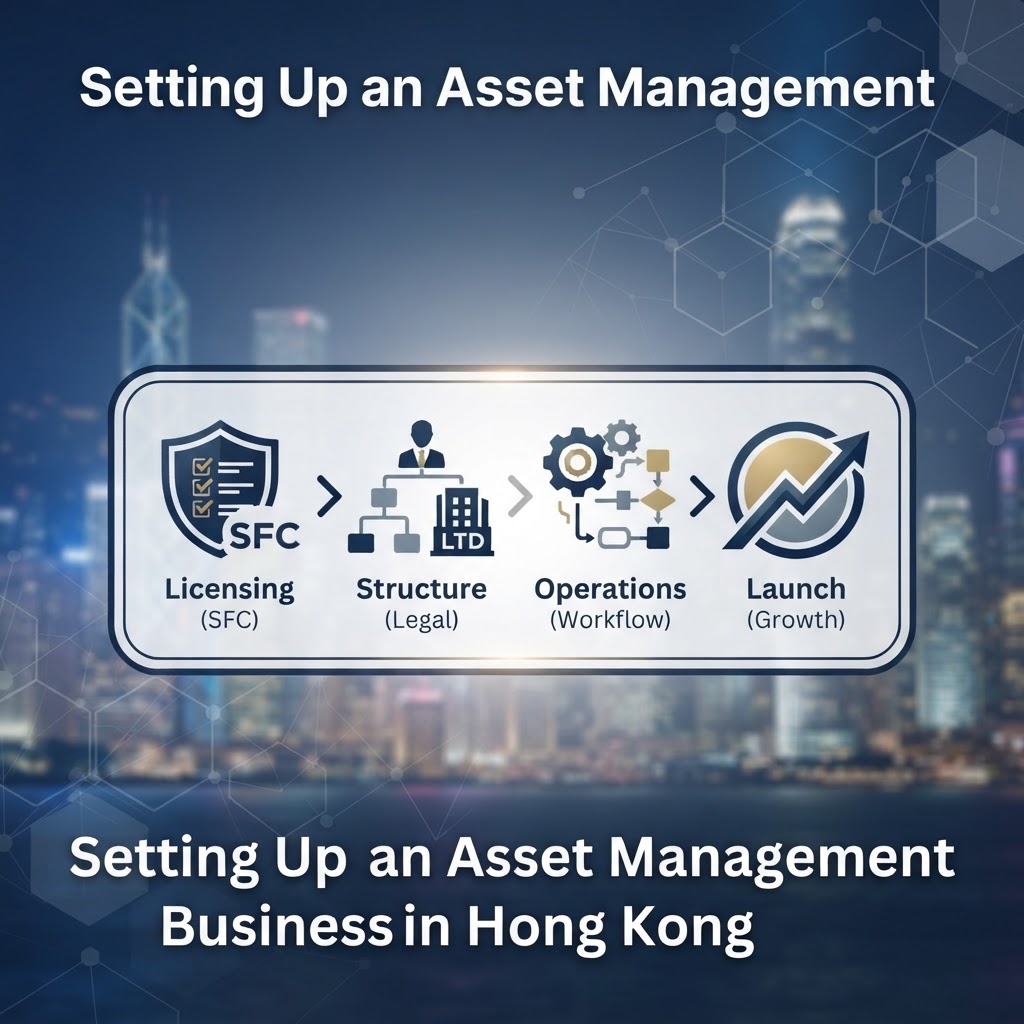
Setting Up an Asset Management Business in Hong Kong
Legal & Compliance
 Licensing & RegulationsSeptember 2026
Licensing and Registration Requirements in Hong Kong
Legal & Compliance
 Digital Assets & RegulationsSeptember 2026
Introduction to the Stablecoins Ordinance
Legal & Compliance